DIY Northern Colorado Electrical Tips: Safe, Simple Homeowner Guide
Taking care of a few basic electrical checkups at home can make your space more comfortable, more convenient, and easier to maintain. Below are DIY Northern Colorado Electrical Tips you can do without opening your electrical panel or handling exposed wiring.
Quick note before you start
- Here are DIY Northern Colorado Electrical Tips you can do by youorself.
- If something doesn’t look right, doesn’t reset, or keeps happening repeatedly, it’s totally okay to pause and call a licensed electrician.
- These tips are designed to be simple, practical, and safe for homeowners.
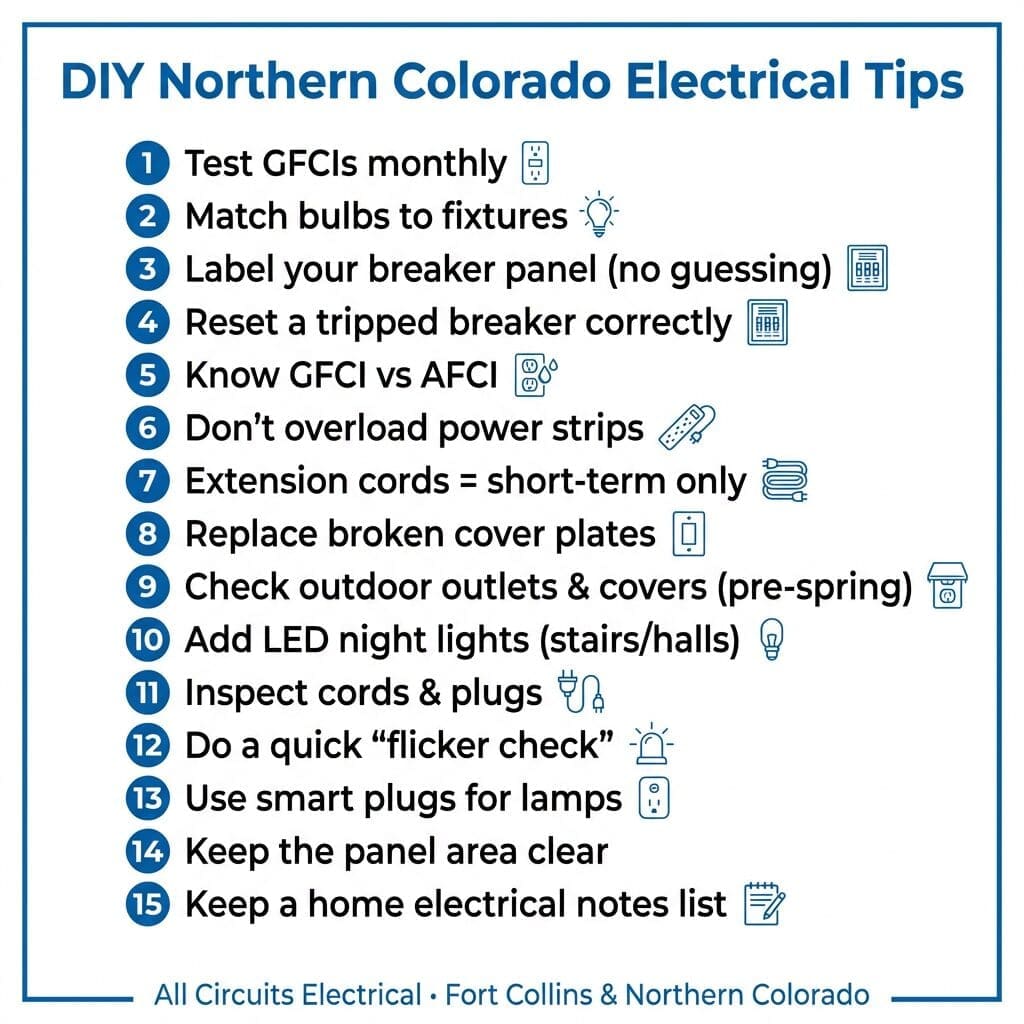
15 DIY electrical tips you can do today
1) Test your GFCI outlets
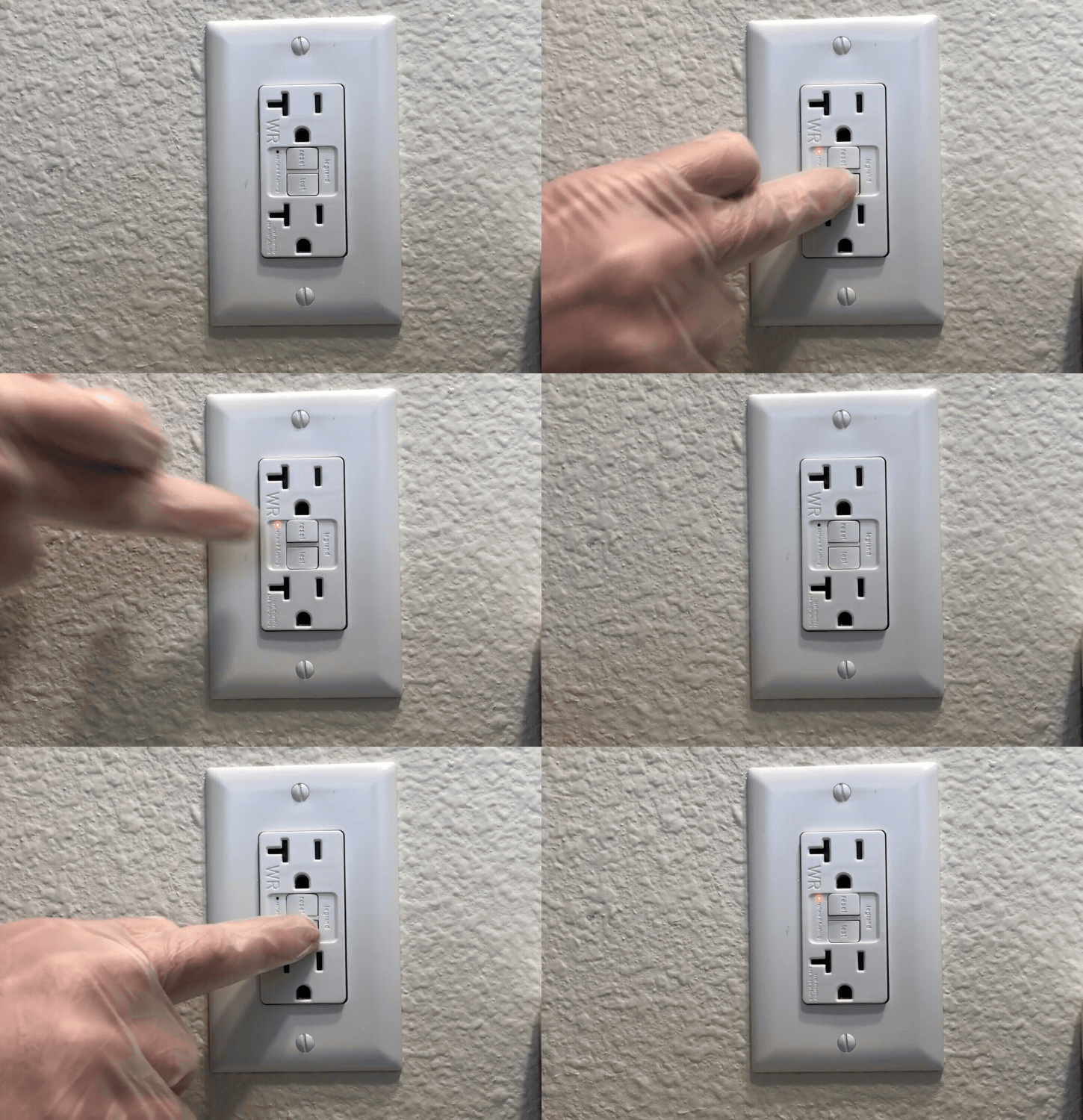
GFCI outlets are common in kitchens, bathrooms, garages, and outside. Press TEST (power should shut off), then press RESET to restore power. If you want a quick refresher on what GFCI protection does and where it’s commonly used, this overview is helpful: https://safeelectricity.org/ground-fault-circuit-interrupters-gfcis/
2) Use the right light bulb for the fixture
If your fixture has a label, follow the recommended bulb type and maximum wattage.
If the label isn’t present, keep it simple: – Choose an LED (cooler, lower energy) – Match the base and shape to the old bulb – Pick brightness by lumens (for most fixtures, 800 lumens or less is a safe starting point). Here’s a simple guide to brightness: https://www.energystar.gov/products/lighting_fans/light_bulbs/learn_about_brightness – For tight glass domes or covered fixtures, buy an LED rated for enclosed fixtures – If the light is on a dimmer, make sure the bulb is dimmable
3) Label your breaker panel (without guessing)
Turn on a few lights and devices, then flip one breaker at a time and write down what actually turns off. Clear labels make future troubleshooting faster and less stressful.
4) Reset a tripped breaker the right way
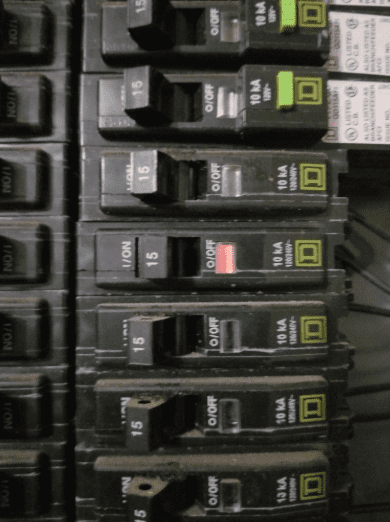
If a breaker trips, flip it fully OFF first, then back ON. If it trips again right away, leave it off and get it checked.
5) Know what “GFCI” and “AFCI” mean
- GFCI protection is typically used in areas where moisture is common.
- AFCI protection is often used in living areas and bedrooms. If you’d like a plain-English overview of AFCI protection, this guide is a good reference: https://www.leviton.com/en/docs/Leviton_Guide_to_AFCI.pdf
6) Don’t overload power strips
Power strips are best for small electronics (TV, router, chargers). Larger appliances and space heaters should be plugged directly into a properly rated wall outlet. Here’s a straightforward explainer on power strip use: https://www.esfi.org/home-safety/electrical-safety/
7) Use extension cords as a short-term solution
If an extension cord is part of your everyday setup, it’s usually a sign you’d benefit from adding an outlet in the right spot. This quick guide helps homeowners choose and use extension cords correctly: https://www.esfi.org/reaching-to-safety-use-extension-cords-properly/
8) Replace cracked or missing outlet/switch cover plates
Cover plates are inexpensive and easy to swap. It’s a simple way to keep things clean and finished-looking.
9) Check outdoor outlets and covers before spring
Make sure outdoor outlets have a weather-rated cover that closes properly. If an outlet is exposed to the elements, a good cover makes a big difference.
10) Add LED night lights in hallways and stair areas
This is a small upgrade that improves comfort and visibility at night, and LEDs use very little energy.
11) Keep cords and plugs in good condition
If a cord is frayed, pinched, or the plug feels loose, replace it. A fresh cord is usually the simplest fix.
12) Try a simple “flicker check” before calling
If a light flickers: – Swap the bulb first – Make sure the bulb is snug (when cool) – Try a different lamp in the same outlet If flickering continues in multiple areas, it’s worth having it looked at.
13) Use smart plugs for lamps and small devices
Smart plugs are great for lighting schedules and convenience. Avoid using them for high-draw items like heaters or large appliances.
14) Keep your electrical panel area clear
Even if you never touch the panel, keeping access open is helpful for maintenance and future projects.
15) Make a “home electrical notes” list
Keep a simple note with: – Which outlets are GFCI – Where outdoor outlets are – Any areas you want to add lighting or outlets This makes future upgrades easier and more organized.
When it makes sense to call a pro
If you run into repeat breaker trips, outlets that won’t reset, or ongoing flickering across multiple rooms, it’s a good time to have a licensed electrician take a look.
Related reading
- Electrical panel upgrade info for Fort Collins homeowners: https://allcircuitselectrical.net/electrician-near-me/electrical-upgrades-electrical-panel-upgrade-cost-fort-collins/
Need a hand in Northern Colorado?
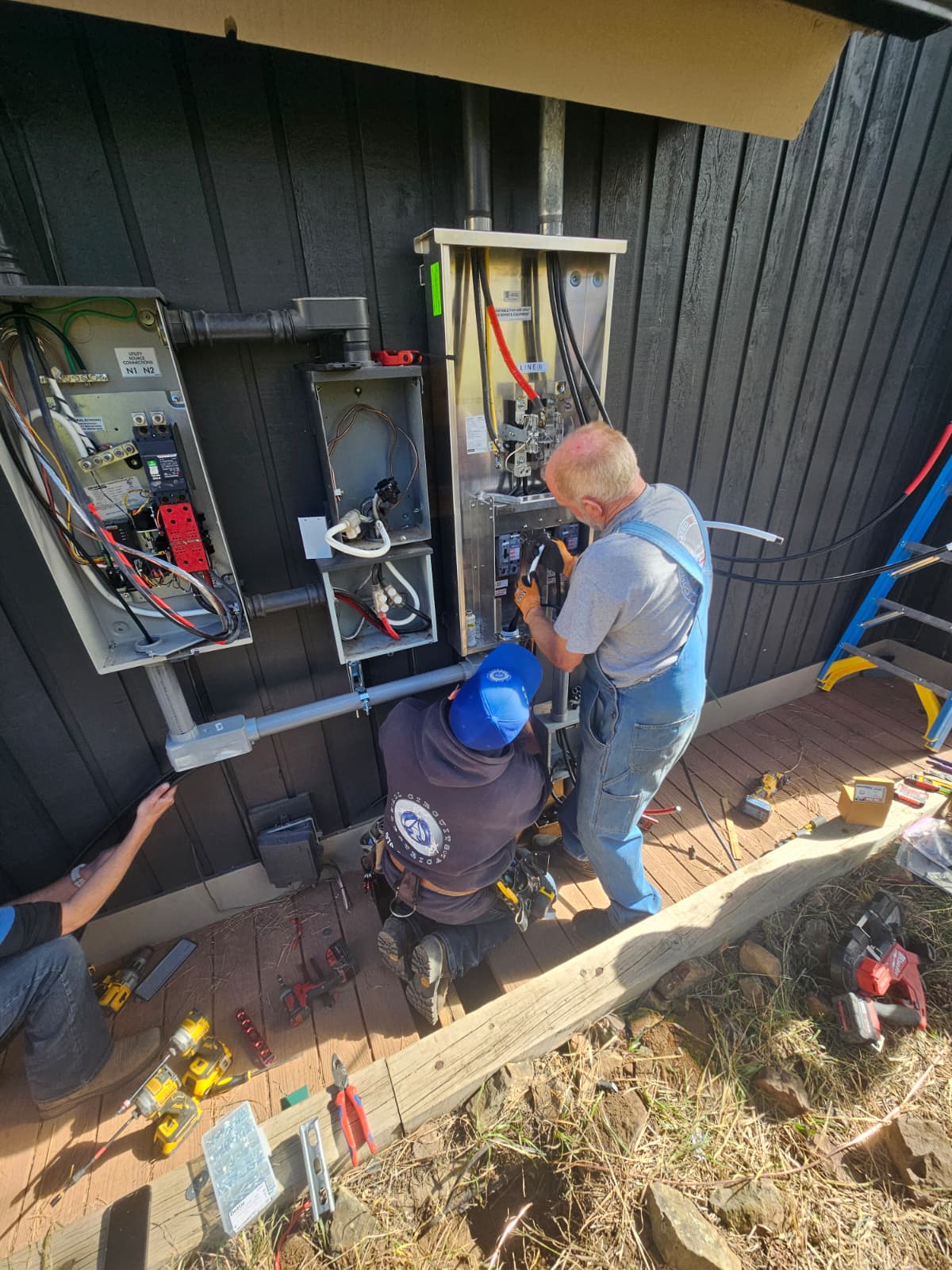
All Circuits Electrical is a family-owned, licensed electrical contractor based in Fort Collins. If you’d like help with outlet additions, lighting upgrades, EV charger installs, panel upgrades, or troubleshooting, we’ll walk you through options and keep the process straightforward.
If you’re looking for more DIY Northern Colorado Electrical Tips or you’d like a pro to handle the install, call us (970) 632-5145 or reach out through our website to schedule a service visit.